Promising health technologies don't always translate into better healthcare. Understanding clinical needs, engaging with the right people and asking the right questions early can make all the difference.
How do researchers know whether they're solving a problem that matters to clinicians and patients? And what does it take to turn a promising idea into something that can be used in practice?
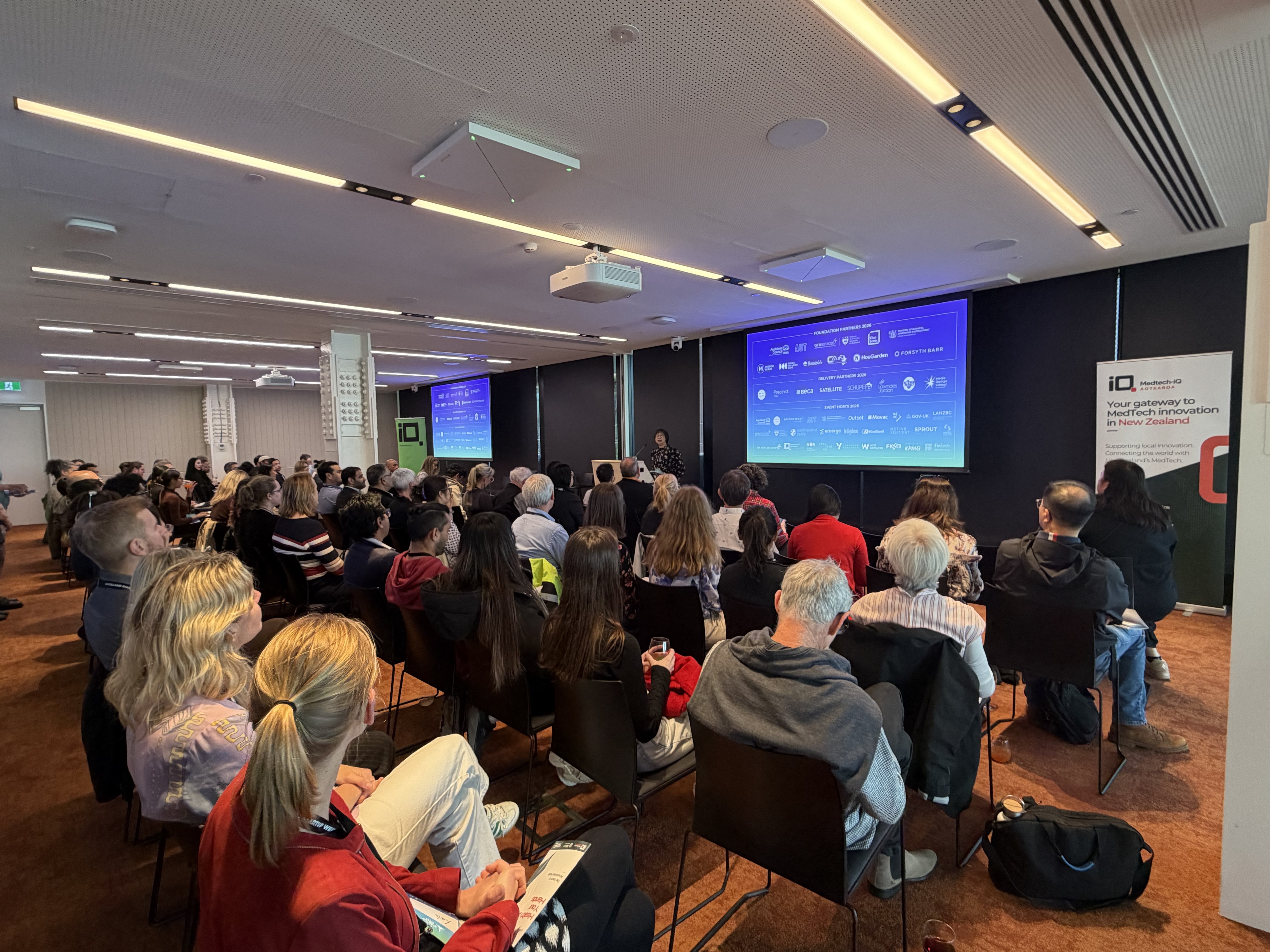
These questions were explored at Health Technology Innovation: Present & Future Collaborations, held at the University of Auckland's Grafton campus on 9 November 2026. Led by Te Tītoki Mataora's Clinical Translation module and hosted by Medtech-iQ Tāmaki Makaurau, the event brought researchers, clinicians and emerging innovators together to build understanding of clinical translation and make connections that could help move their ideas forward.
The interactive panel featured Professor John Windsor, University of Auckland surgeon with extensive experience in MedTech spinouts; Professor Robyn Whittaker, Clinical Director of Medtech-iQ Aotearoa and HealthX; Dr Adrian Ng, GP, urgent care physician and founder of RapiDose; and Dr Haruna Suzuki-Kerr, a University of Auckland hearing researcher working across research and clinical translation. Together, they shared insights from clinical practice, research and entrepreneurship.
The problem comes before the technology
A strong technical idea is only a starting point. Before committing to development, researchers need to understand whether the problem matters to patients and clinicians, how it is currently managed and where a new approach could make a difference.
The panel explored practical ways to do this, from mapping patient pathways and observing clinical workflows to speaking directly with end users. Even the same clinical task can be approached differently by different practitioners, making it important to seek a range of perspectives rather than relying on a single conversation.
For researchers developing technologies with multiple potential applications, the advice was to start with one clearly defined use case. Demonstrating value in a specific setting makes it easier to test assumptions, build evidence and identify opportunities for broader application. Early prototypes can also help clinicians see how a technology might fit into their practice and provide more meaningful feedback.
Better connections, better questions
Access to clinical expertise can be challenging, particularly for students and early-career researchers. Clinicians, meanwhile, may recognise problems in everyday practice without having the time or technical partners to explore potential solutions.
Bringing these groups together creates opportunities to identify needs, share expertise and develop ideas that might not emerge within individual disciplines.
But making an introduction is only the beginning. The panel emphasised the importance of listening, remaining open to feedback and being willing to change direction. Researchers need to understand the problem rather than simply seek confirmation that their proposed technology is the answer.
Multidisciplinary collaboration is equally important. Clinical expertise helps define the need, while engineering and research capabilities can help develop a solution. Bringing commercial and regulatory perspectives into these conversations early can also help teams understand what will be required to move towards clinical use.
Designing for adoption, not just demonstration
A technology may work well in a laboratory but still face significant barriers to adoption in healthcare.
Beyond demonstrating technical performance, researchers need to consider the evidence required to establish safety and clinical benefit, the relevant regulatory pathway and how a solution could fit within existing health services.
Understanding who will use a technology, who makes purchasing decisions and who will ultimately pay for it is also critical. These are not always the same people, and each may have different requirements.
Considering regulation, evidence generation and health technology assessment early can help researchers make informed development decisions and avoid investing in solutions that are difficult to implement.
Clinical validation is therefore not a single step in the development process. It requires ongoing engagement with the people and systems a technology is intended to serve.
Making clinical translation more accessible
The event brought together two complementary areas of support within Medtech-iQ Aotearoa: Te Tītoki Mataora's focus on developing researchers' translation capabilities, and Medtech-iQ Tāmaki Makaurau's role in connecting people with the expertise and opportunities needed to progress their ideas.
Beyond the event, clinical office hours delivered through the Auckland Bioengineering Institute and the Faculty of Medical and Health Sciences provide researchers with opportunities to discuss early ideas, explore clinical needs and identify potential collaborators.
In 2026, these office hours have supported 33 researchers and clinicians, helping make clinical expertise more accessible at an early stage of development.
The discussion reinforced a central lesson for health technology innovation: meaningful clinical impact begins with understanding the problem, not just developing the technology.
By building translation capability and connecting researchers with clinical expertise, Te Tītoki Mataora and Medtech-iQ Aotearoa are helping promising ideas take more informed steps towards improving healthcare.
Have a health technology idea? Connect with us to access clinical expertise, explore opportunities for collaboration, and take the next step towards clinical translation.